
In Vastu Shastra, the kitchen is agni sthana — the seat of fire and transformation. It is where raw food becomes nourishment, which is why its placement shapes daily mood more than almost any other room. I walk clients through their floor plans on video and ask simple questions: Where does heat collect? Who cooks when? Does anyone avoid the space? Answers matter as much as compass direction.
Why classical placement still has logic
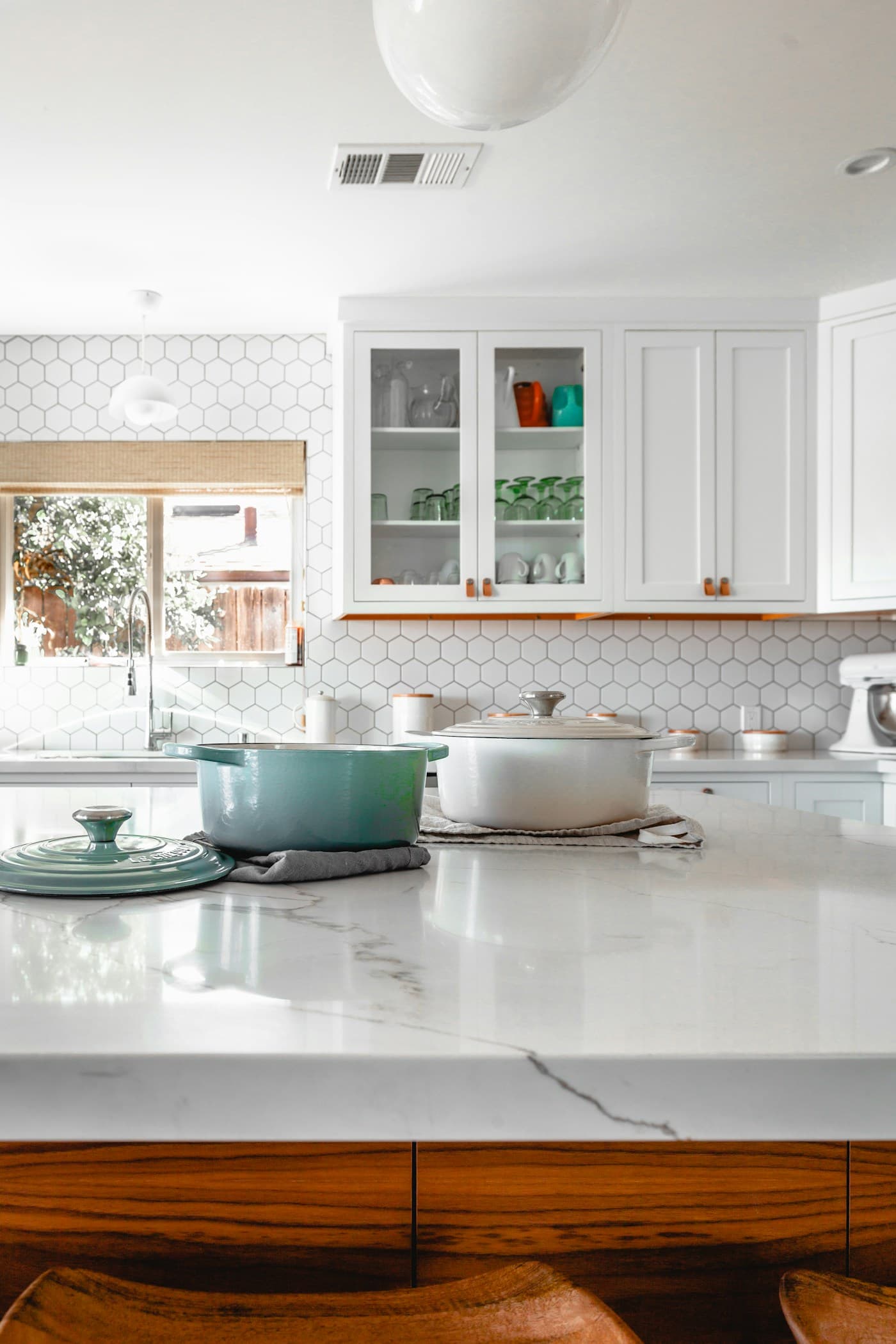
Traditional texts prefer the kitchen in the south-east, where the fire element is at home. North-east kitchens are flagged because agni can overstimulate a zone linked with clarity and rest. Kitchens at the exact centre — brahmasthan — may make the home feel restless, as if activity never settles. A kitchen directly visible from the main door can pull energy toward hurry before anyone has fully arrived home. These are not superstitions; they describe how layout shapes rhythm: noise, smell, heat, and who gathers where.
Modern apartments rarely offer ideal plots. I have reviewed kitchens in north-west, west, and even north-east homes that work well because the stove faces a supportive direction, the sink sits apart from fire, and ventilation is excellent. The mistake is treating Vastu as pass/fail based on a brochure label.
Daily habit reinforces Vastu — a tidy, well-ventilated kitchen matters as much as compass direction.
Fire and water should not compete
The stove and sink represent fire and water. When they sit on the same line or back-to-back without buffer, I often see symbolic and practical friction — arguments during cooking, burnt pans, plumbing issues, or a sense that meals are always rushed. Remedies start simple: create separation on the counter, shift orientation where the gas line allows, or use an island or partition to break the direct line.
Stove direction is the next layer. Classical guidance varies by household tradition; in consultations I prioritize what allows the cook to face an auspicious direction without awkward ergonomics. A beautiful remedy you abandon after a week is not a remedy.
Open kitchens and studio layouts
Open kitchens dominate new Indian builds. They look social on Pinterest; in Vastu terms they merge fire with living energy. That can be fine for young couples who eat lightly and entertain often. For families with heavy tadka, long simmer times, or elders who need quiet after meals, the same layout feels invasive. Low partitions, sliding glass, range hoods with real capacity, and consistent tidy-up rituals prevent cooking from occupying the whole home psychologically.
Colour, light, and storage
Earthy tones calm an overactive fire corner. Warm light makes a cold north-facing kitchen feel grounded. Exposed clutter — visible garbage, overflowing counters, broken knobs — weakens any direction. I ask clients to fix three mechanical things before buying yantras: exhaust flow, lighting, and where knives and cleaning supplies live. Small apartments benefit from closed storage so the kitchen can "close" visually when not in use.
Health patterns I take seriously
We do not diagnose disease from Vastu — that would be irresponsible. I do notice when recurring digestive complaints, sleep trouble after late cooking, or family tension at mealtimes cluster in homes with strained kitchen placement. Fixing flow sometimes eases those patterns alongside medical care. Vastu complements life; it does not replace doctors.
When to book a Vastu session
Book a residential consultation when you are renovating, buying, or living in a home that looks correct on paper but feels heavy daily. We map the kitchen within the full plan — entrance, bedrooms, toilets, prayer space — and give prioritized remedies: what to change this month, what to accept and compensate, and what to stop worrying about because social media said so.
Dining adjacency and family rhythm
Kitchen placement cannot be separated from where the family eats. When dining sits in a stable zone and the cook can see guests without turning their back to the room, meals tend to gather people. When dining is squeezed between entry and kitchen rush, family time becomes logistics. I suggest rotating seating, better lighting over the table, and phone baskets during dinner before structural changes.
In joint families, multiple cooks and staggered meal times complicate fire energy. Separate storage for each kitchen user, clear labels, and agreed quiet hours after night cooking reduce friction more than directional debates alone.
Gas, induction, and modern fuels
Classical texts describe fire at the stove; induction shifts heat source but not the symbolism of transformation. I still treat the primary cooking surface as agni sthana. Portable induction on a dining table long-term is a workaround, not a permanent kitchen — if you cook daily on a hot plate in the living room, we discuss zoning and ventilation honestly.
Seasonal and regional adjustments
Coastal humidity and inland dry heat change how kitchens feel in the same compass zone. Exhaust capacity, cross-ventilation, and anti-mould habit matter in Chennai flats differently from Jaipur homes. Vastu recommendations should respect climate — a remedy that ignores ventilation fails in monsoon.
Prayer space near the kitchen
Many Indian homes place a small mandir near the kitchen for daily prasad. Keep the mandir clean, elevated, and not directly above or beside the sink if avoidable. Incense and cooking smoke compete for air quality — open a window when both run together. Respect matters more than square footage.
If your kitchen was renovated from a older layout, note where pipes run. Hidden leaks under slabs create musty energy and real mould. Fix plumbing before buying copper strips or directional charts — physical damp defeats symbolic fixes.
Frequently asked questions
Is south-east the only acceptable kitchen direction?+
South-east is the classical fire zone, but millions of homes function well with kitchens elsewhere when fire and water are separated, ventilation is good, and the stove is oriented thoughtfully. I assess the whole plan — not one compass label in isolation.
Can I fix kitchen Vastu without renovation?+
Often yes. Shifting stove orientation, separating sink and burner, improving light and exhaust, and adjusting colour and clutter frequently change how the space feels — without breaking walls.
Does an open kitchen fail Vastu by default?+
Not automatically. Open kitchens need extra care for sightlines from the entrance and for keeping cooking energy from dominating the living zone. Screens, islands, and habit boundaries help.
When should I book a residential Vastu session for the kitchen?+
If meals feel rushed, digestion or stress complaints cluster in the family, or people avoid eating together despite a beautiful dining area — a whole-home review usually reveals how the kitchen interacts with other zones.
Next step
Want this applied to your chart or home?
Continue with a residential vastu consultation tailored to your details.